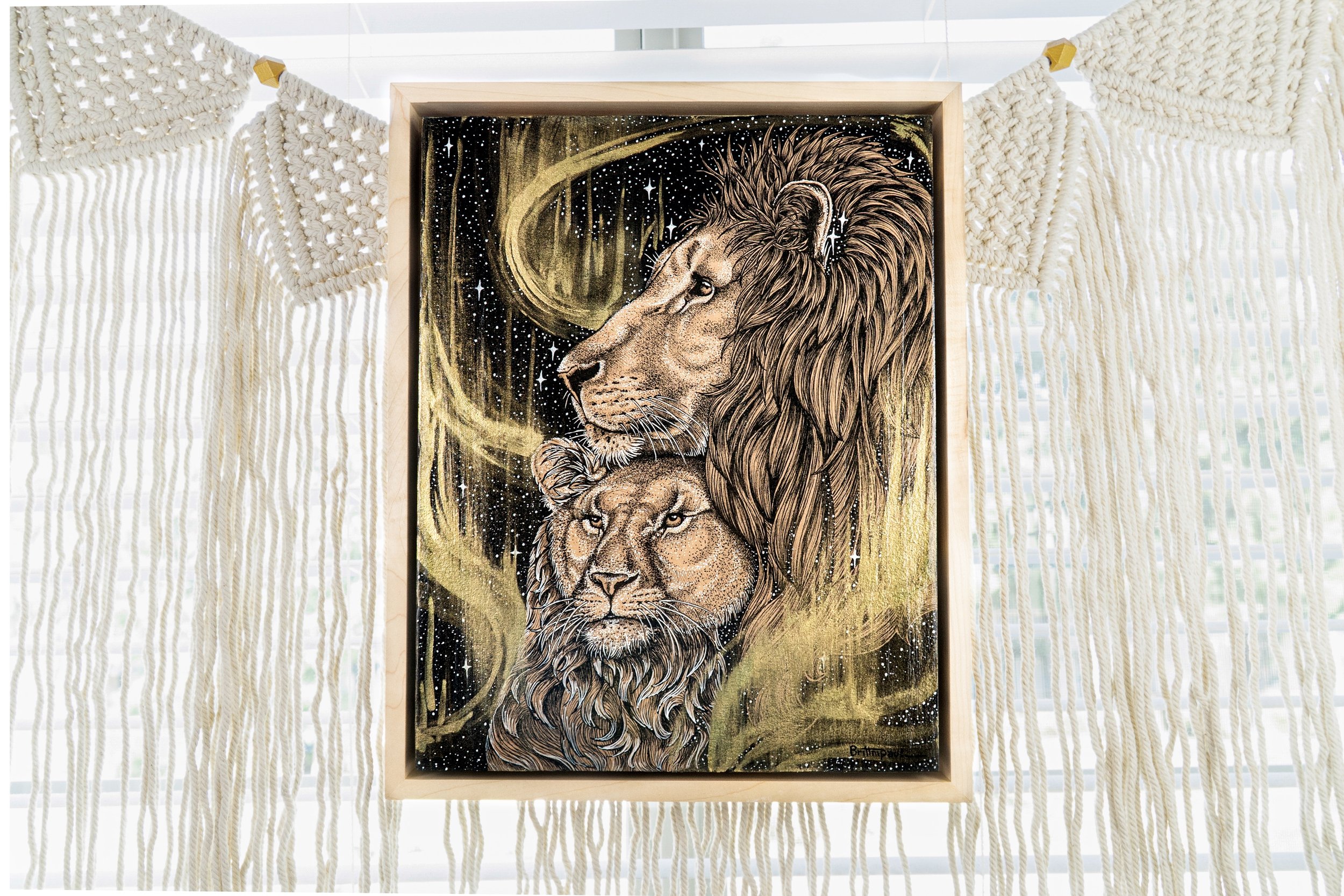
Feb 2020, Ink on Elm burl, 25.5x2x20”
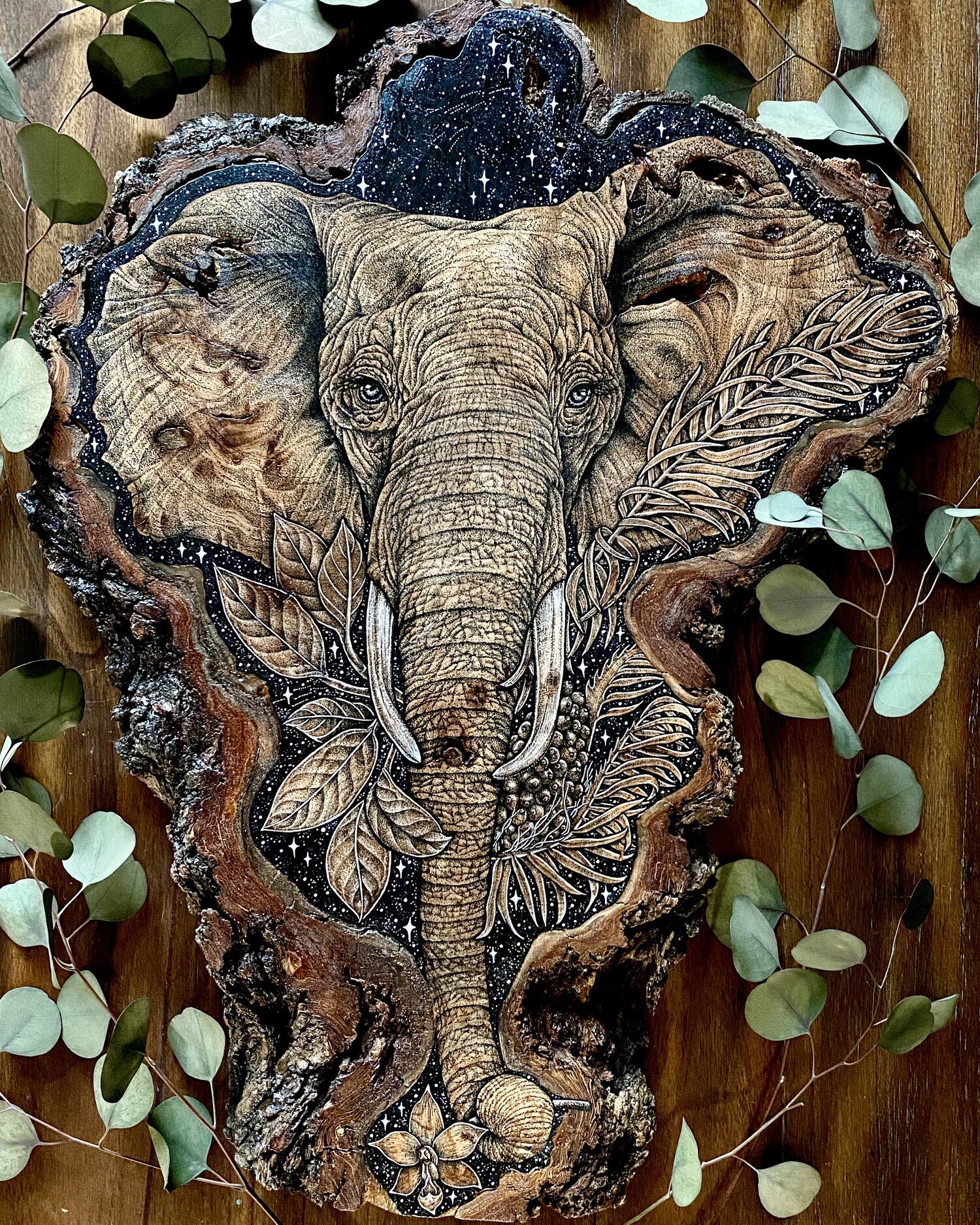
Forest elephants in both Africa and Asia have been nature’s farmers and conservationists for as long as they’ve existed. They push over trees to maintain ecosystems, dig up waterholes with their tusks that other smaller animals can utilize and fertilize land. The gaps they leave in the forests encourage new plant growth and create pathways for other animals. Most importantly, the tons of vegetation and fruit they eat get deposited in their dung, maintaining plant diversity for the miles and miles of land they traverse.
Though they were the original “plantation” caretakers, their homes have been destroyed and due to the human plantations that have taken over, plants like palm oil trees and cocoa. . Coexistence and respect for these gentle giants; a wise & ancient species like no other. Check your food label today; are those ingredients being responsibly sourced? If it doesn’t say; don’t we deserve that visibility to make informed decisions?
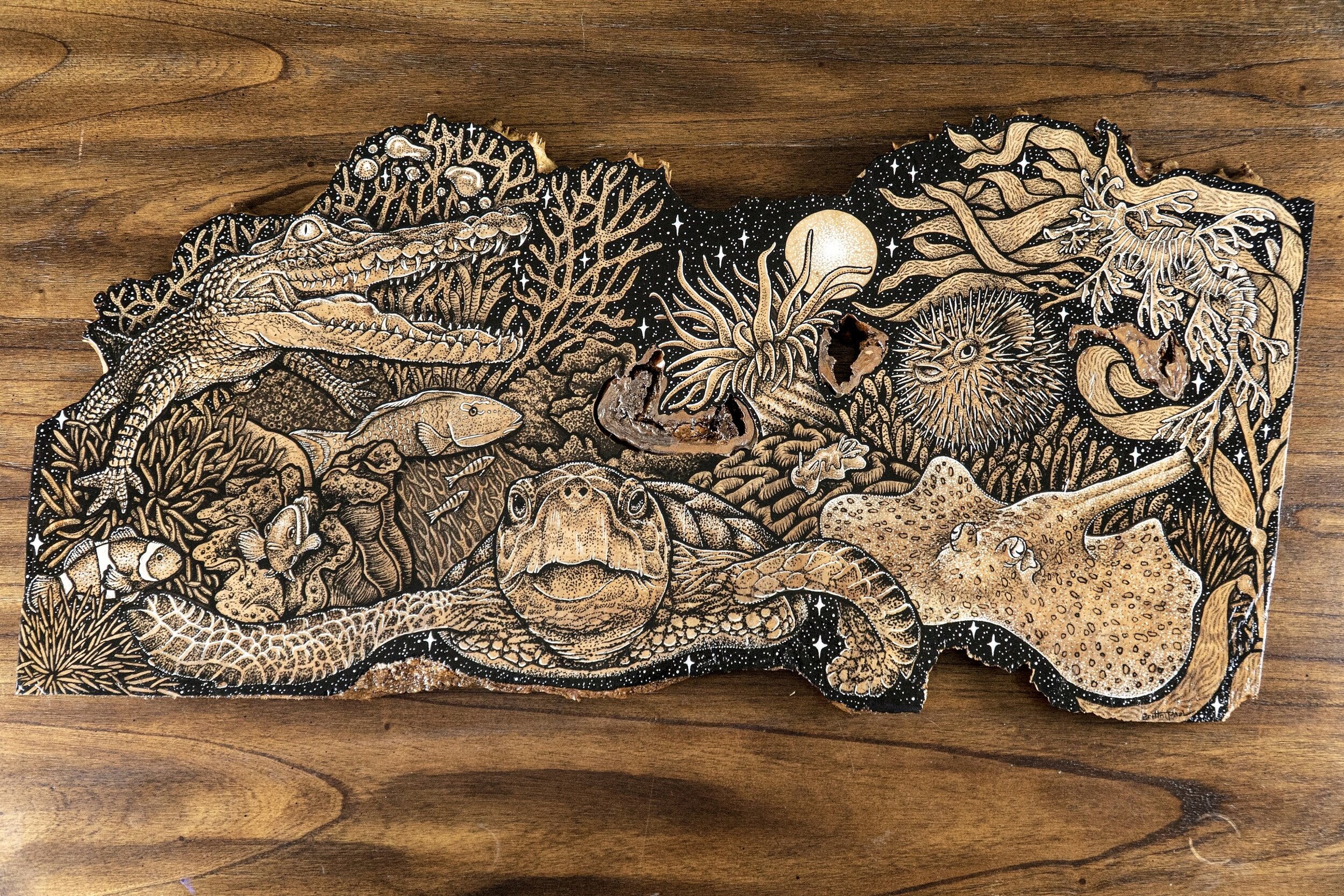
“Great Human Barrier” is one of my favorite ink on wood pieces. Done on sustainable maple burl, I made sure to follow the shape and knots of the piece to create a cohesive reef scene. Each of the species pictured are endangered natives of the Great Barrier Reef.
This piece was intended to be of my husband and I. Together, but independent in what paths we look out to in the horizon. Leaning on each other for support while still standing strong on our own.
My husband is my biggest support and I honestly would not be the artist I am today without him. My path would look much different.
Who or what is your biggest support in your life?
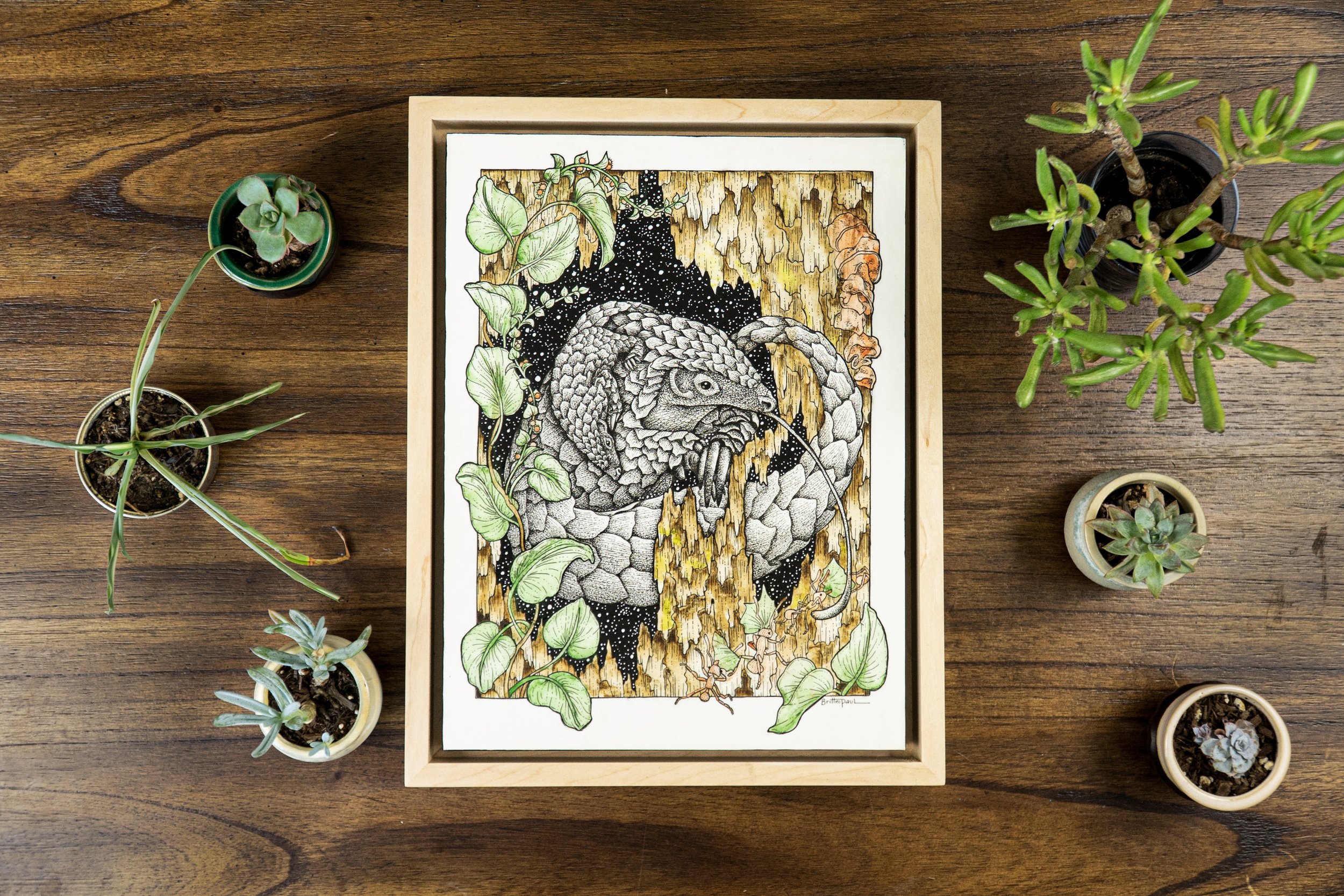
Pangolin (aka Manis) are a scaly anteater found in Asia and Africa and are illegally poached, both for its scales and bush meat. It’s the most illegally trafficked non-human mammal in the world and conservation efforts look to interrupt that transport. In just a week in April 2019, Singapore seized a 14.2-ton shipment and a 14-ton shipment from Nigeria of pangolin scales (worth 72,000 pangolins).
Spread the love for these cuties on World Pangolin Day which is on the third Saturday of every February!